Charles Clement Walker
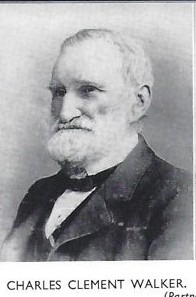
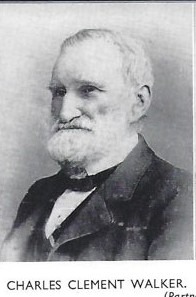
Charles Clement Walker was born on November 23rd 1822 in Clerkenwell and was educated in London.
He joined his brother William in the construction of gas-work machinery first in
Clerkenwell and then Donnington, Shropshire. Their engineering firm became known as C.& W. Walker of Donnington (Midland Iron Works) and they made some of the largest structures for the purification and storage of gas in this country and abroad.
Charles was a pioneering industrialist whose influence extended far beyond the factory gates. He was a progressive employer and a devoted advocate for education and welfare. In 1874 he founded an Institute for his workers. It had a reading room and library, stocked in part with books from his personal collection. He later added a workers’ dining hall and public baths, underscoring his commitment to the dignity and well-being of his employees.
He was a pioneer of technical education and in 1882 he established the Donnington School of Science and Art. By 1891 he was publicly championing the implementation of the Technical Instruction Act 1889. His foresight, commitment and the subsequent support from the Walker Trust established in his will, resulted in the opening of the Walker
Technical College, Hartshill Oakengates Shropshire, in 1927.
C.C Walker was a Burgess, J.P. and a pillar of the community. He went to live at The Old Hall Lilleshall in 1869 and it was in the library, surrounded by a vast collection of books and artefacts, that he wrote his speeches, influential letters and books. From there he also made plans for the public gardens and Shakespearean memorial in London which he funded. He served as a Lilleshall Church warden, Parish Council Chairman and Way warden and was also involved with the Lilleshall Music society and the local school.
He was very interested in astronomy and other sciences and became a Fellow of the Royal Astronomical Society. In 1873 he designed and built an observatory in the grounds of the Old Hall and would give demonstrations of the telescope to his friends - also to his works foremen after their annual dinner. In 1884 he wrote a paper for the Royal Meteorological Society on a lightning strike to the Lilleshall Monument and assisted in its restoration.
During 1887 he researched the history of Lilleshall Abbey and, with the support of the Duke of Sutherland, he excavated the ruins and made plans of the whole area. His research was later included in a book on Lilleshall history which remains a valuable contribution to local heritage.
Charles sadly died age 74 on February 4th 1897 and is buried in the graveyard of St Michael and All Angels Church, Lilleshall. Today, his legacy endures through the Walker Trust - a lasting testament to a man who combined industrial might with intellectual curiosity, civic leadership, and a lifelong commitment to public good.
HERITAGE
Exploring Lilleshall's rich history and culture.
Community
find out latest events
phone number coming soon
© 2025. All rights reserved.
MADE BY COPYCORP copycorp.co.uk
DISCLAIMER - all efforts have been made to clear the copyright for material on this website